
Industry-Relevant GenAI Course
Generative AI for Business with Microsoft Azure OpenAI
 Application closes on
Today
Application closes on
Today

 Speak with our expert
+91 80694 74602
Speak with our expert
+91 80694 74602





Learn more about the course
Get details on syllabus, projects, tools, and more

Generative AI for Business with Microsoft Azure OpenAI
Master Gen AI for impactful career growth
Application closes Today
What's new?
-

Code & no-code tracks
Tailor your learning experience with option to master Prompt Engineering either with or without coding. Dive deep into generative AI concepts in a way that suits your skill level and goals.
-

Microsoft Azure tools
Get hands-on experience with Azure Lab resources, including OpenAI Studio, Azure AI Studio, and Promptflow.


Program Outcomes
Become a GenAI-enabled Business Leader
Empower your business with Generative AI to fuel innovation and accelerate growth.
-

Master tools like Azure OpenAI, enabling you to build and deploy AI-driven workflows
-
Tailor AI solutions for real-world challenges – build AI solutions using Python (coding track) or Azure Prompt Flow (no-code track)
-
Master responsible and ethical AI practices
-
Prepare for AI900 certification and professional growth
Key program highlights
Why choose the Gen AI program
-

Learn GenAI with Microsoft Azure
Gain practical skills with Azure OpenAI Studio, Azure AI Studio, and Promptflow
-

Microsoft and Great Learning Certificate
Earn a prestigious certificate of completion and showcase your expertise to your professional network
-

Industry-relevant curriculum
Master essential topics like prompt engineering, text classification, summarization, RAG, and responsible AI
-

AI900 training by Microsoft certified trainers (optional)
Prepare for the Microsoft Azure AI Fundamentals (AI900) exam with training and credentials to elevate your professional profile
-

Real-world applications and projects
Work on 8+ case studies and 2 hands-on projects, and 2 additional projects to apply your knowledge to diverse challenges across industries
-

Expert mentorship and personalized support
Get AI expert guidance, 1:1 support, weekly concept sessions, and dedicated program manager assistance for your projects


Skills you will learn
Prompt Engineering
Classification Tasks with GenAI
Building AI Agents
Content Generation and Summarization
Using OpenAI APIs
Using Python SDK for Prompt Engineering
Microsoft Azure Cloud Services for AI
Retrieval-Augmented Generation (RAG)
Responsible AI
Prompt Engineering
Classification Tasks with GenAI
Building AI Agents
Content Generation and Summarization
Using OpenAI APIs
Using Python SDK for Prompt Engineering
Microsoft Azure Cloud Services for AI
Retrieval-Augmented Generation (RAG)
Responsible AI
view more
Secure top Gen AI jobs
-
43%
Annual Growth by 2030
-
$438 Bn
India GDP for GenAI
-
7.8 Hrs
saved using GenAI in business
Our alumni work at top companies
- Overview
- Why GL
- Learning Journey
- Curriculum
- Projects
- Tools
- Certificate
- Faculty
- Mentors
- Reviews
- Career support
- Fees
- FAQ

This GenAI program is ideal for
The Generative AI for Business with Microsoft Azure OpenAI empowers you to acquire the skills to drive innovation, build AI solutions, and create lasting business impact.
-
Business Leaders and Decision-makers
C-suite executives, senior leaders, and strategic decision-makers eager to harness AI for innovation.
-
Senior Managers and IT Consultants
Senior Managers and professionals in IT, healthcare, and finance aiming to leverage AI for operational excellence.
-
Entrepreneurs and Product Innovators
Startup founders, business owners, and product managers ready to develop AI-driven workflows and prototypes efficiently.
-
Professionals aiming for career growth
Lead impactful AI projects, mastering scoping, management, and cross-functional collaboration to drive innovation and create stakeholder value.
Experience a unique learning journey
Our pedagogy is designed to ensure career growth and transformation
-

Learn with self-paced videos
Learn critical concepts from video lectures by faculty & industry experts
-

Engage with your mentors
Clarify your doubts and gain practical skills during the weekend mentorship sessions
-

Work on hands-on projects
Work on projects to apply the concepts & tools learnt in the module
-

Get personalized assistance
Our dedicated program managers will support you whenever you need




Curriculum
This program is structured into 3 distinct modules, designed to provide an in-depth understanding of Azure OpenAI and Generative AI. It begins with Module 1, which introduces the fundamentals of AI, machine learning (ML), large language models (LLMs), and prompt engineering, along with an overview of Azure's OpenAI services. After completing Project 1, learners will choose between two tracks: No-code or Coding. Module 2 focuses on introducing the foundational tools and workflows needed to effectively work with Generative AI on a large scale. Coding track learners will follow the curriculum with Python, while No-code track learners will leverage Azure Prompt Flow to achieve the same objectives. In Module 3, learners gain hands-on experience with the Azure OpenAI API key and AI Studio to create workflows, exploring practical applications of Generative AI in tasks such as text classification and summarization. The final module, Module 4, prepares participants for the AI900 Certification Exam.
Preparatory Module
The goal of this course is to equip you with all the essential tools for your learning journey, provide an understanding of the Azure interface, introduce AI and its applications, and cover the foundational math behind it.
Pre-work-01: AI with Azure - Introduction
Pre-work-02: AI with Azure - Semantic Search Case Study
Course-01: Leveraging Generative AI for Business Applications
By the end of this course, you’ll grasp the business potential of GenAI and Agentic AI, master prompt engineering, build AI workflows with Python or no-code tools, and leverage LLMs for key NLP tasks like summarization, translation, and classification.
Week 01: Strategic AI Adoption: Navigating the GenAI & Agentic Landscape
Outcome: This week will help you understand the current business landscape of Generative and Agentic AI, while equipping you to identify key industry trends, opportunities, and challenges in their adoption.
Topics Covered:
- Overview of Generative AI: Definition, evolution, and impact on various industries.
- Overview of Agentic AI: Definition, characteristics, and potential applications.
- Market trends and business opportunities in GenAI and Agentic AI.
- Case studies of successful GenAI and Agentic AI implementations across different sectors
Week 02: Driving Business Value with Effective Prompting
Outcome: This week will equip you with the fundamentals of prompt engineering across text, speech, and image modalities, teach you techniques to craft effective prompts for achieving precise AI model outputs, and help you understand the nuances of designing prompts for different Azure AI services.
Topics Covered:
- Prompt Engineering Basics: Principles and best practices
- Text Prompts: Techniques for generation, summarization, and conversation
- Speech Prompts: Using Azure AI for speech-to-text and text-to-speech
- Image Prompts: Guiding image generation and manipulation
- Advanced Techniques: Zero-shot, Few-shot, Chain/Tree-of-thought, self-consistency, Rephrase & Respond
Week 03: Python for Prompt Engineering /Introduction to Azure Prompt Flow
Outcome: This week, you will learn to develop Python scripts for interacting with Azure OpenAI and handling text data (Coding Track), as well as use Azure PromptFlow to design, test, and deploy prompt-based applications without extensive coding (No-Code Track)
Topics Covered:
Coding Track:
- Text in Python: Strings, common string methods
- File Handling: Reading/writing files, working with .txt, .csv, .json
- Text Manipulation & Cleaning: Advanced string operations (find/replace, extract, split/join), removing unwanted characters, handling dates and numbers in text
No-Code Track:
- Promptflow Basics: Introduction, key features, setup, and integration
- Navigation & Workflows: Exploring the interface and building basic workflows
Sample Case Study: Cleaning and Analyzing Survey Responses at HealthTrack
Tool & Techniques Covered:
Code: Colab, Azure AI Services/ Foundry, Azure OpenAI Model, Azure AI Inference client library (Python), POML/ prompty
No Code: Azure Prompt Flow
Week 04: Leveraging LLMs for Business Intelligence & Automation
Outcome: This week enables you to leverage LLMs for business intelligence and automation by applying them to various natural language processing tasks, implementing text-to-text solutions such as summarization, translation, and content generation, and performing text-to-label tasks including sentiment analysis and entity recognition.
Topics Covered:
- Explore business use cases for text classification and implement LLM-based classification workflows.
- Evaluate sentiment and aspect-based classification using accuracy metrics.
- Understand business applications of text generation and implement LLM-driven text-to-text workflows.
- Assess text generation outputs using ROUGE, BERTScore, and LLM-based evaluation.
- Generate automated summary reports and personalized product recommendations for customers
Tool & Techniques Covered:
Code: Colab, Azure AI Foundry, Azure OpenAI models, Semantic Kernel SDK, POML
No Code: Azure Prompt Flow
Week 05: Project-1 (Sample Business Problem)
TechGizmo, a leading tech company, needed a way to analyze thousands of customer reviews across multiple platforms to identify which product features, like performance, design, and usability, resonated with users, moving beyond general sentiment analysis.
Week 06: Learning Break
Course-02: Building Intelligent Systems with RAG & Agents
This course teaches the deployment and application of Generative AI, covering embeddings, vector databases, and LLMs for efficient question answering. You’ll learn to implement RAG with multimodal inputs, evaluate outputs, and understand key AI agent architecture and design patterns. The course also covers deploying LLMs, building autonomous AI agents, and mastering end-to-end AI workflows.
Week 07: Enhancing AI solutions with Retrieval Augmented Generation
Outcome: This week, you will learn to enhance AI solutions using embeddings, vector databases, and LLMs to build efficient Retrieval-Augmented Generation (RAG) systems for effective question answering.
- Explore business use-cases for RAG
- Build RAG workflows using LLMs
- Learn embeddings and how to choose embedding models
- Overview of vector databases
- Manage vector databases (CRUD operations)
- Implement RAG for question answering
Tool & Techniques Covered:
Colab, Azure AI Foundry, Azure OpenAI Models, Azure AI Search
Week 08: Advanced RAG for Business Applications & Performance Evaluation
Outcome: This week, you will learn to implement Retrieval-Augmented Generation (RAG) for multimodal inputs, evaluating RAG model outputs, and mastering advanced techniques to improve the quality and performance of RAG systems in business applications.
Topics Covered:
- RAG with multimodal data sources (data with text, images and tables)
- Evaluating RAG outputs (Ragas and RAG Triad)
- Advanced Retrieval Mechanisms ( Hypothetical Questions, Query Expansion)
- Advanced Generation Mechanisms (Reranking, Information Compression)
Sample Case Study: Enhancing Patient Data Insights at MedCare using Advanced RAG
Tool & Techniques Covered:
Colab, Azure AI Foundry, Azure OpenAI Models, Azure AI Content Understanding, Azure AI Search, Azure AI Evaluation SDK
Week 09: Deploying a Generative AI-powered App
Outcome: In this week, you'll learn to deploy and serve Large Language Models, optimizing them for real-world use. You'll also gain a thorough understanding of the end-to-end AI application workflow, covering prompt engineering, building interfaces with Streamlit, containerizing with Docker, and hosting models.
Topics Covered:
- Master the deployment, management, and serving of Large Language Models (LLMs)
- Gain expertise in configuring and optimizing models for high-volume, high-performance tasks
- Use Streamlit to design user-friendly interfaces for AI applications
- Learn to Dockerize applications for seamless containerization and deployment
Tool & Techniques Covered:
Colab, Azure AI Foundry, Azure OpenAI Models, Azure Container Apps/ Azure App Services/ Azure VM
Week 10: Automating Tasks with Agentic Systems
Outcome: This week covers the key differences between AI agents and LLM assistants, the evolution and use cases of generative AI agents, and the core functional modules of AI agent architecture. You will learn agentic design patterns, explore single-agent systems, and gain hands-on experience in designing and building simple autonomous AI agents.
- Generative AI Agents: Definition, use cases, and LLM vs. agent workflows.
- LLM Workflows with LangGraph/CrewAI: Sequential, parallel, and conditional workflows.
- AI Agent Architecture: Key components - planning, reasoning, execution, and memory.
- Types of Agents: Reflex, model-based reflex, goal-based agents.
- Agent Building: Python (LangChain with Azure) and no-code (Azure AI Agent Service)
Sample Case Study: Generative AI Agent for Automated Lead Generation and Customer Engagement
Tools & Techniques Covered:
Colab, Azure AI Foundry Agent Service (Agent Factory), Semantic Kernel Framework/ AutoGen Framework
Week 11: Project-2 (Sample Business Problem)
This project involves deploying a Generative AI Agent to automate customer support for an e-commerce platform. The AI will handle common queries, process return requests, and provide personalized recommendations. It covers the deployment, optimization, containerization, and UI design of a high-performance support agent capable of managing high volumes of customer interactions.
Week 12: Learning Break
Course-03: Operational Excellence with LLMOps
Week 13: Foundations of LLMOps
Outcome: This week, you will learn foundations of LLMOps, focusing on the principles and practices of managing the lifecycle of large language models (LLMs). You will learn about model versioning, deployment strategies, and how to effectively manage LLMs
Topics Covered:
- Introduction to MLOps and LLMOps: Differences and similarities.
- LLM lifecycle: Experimentation, training, deployment, monitoring.
- Model versioning and registry in Azure Machine Learning.
- Deployment of LLMs as endpoints (Coding Track) and through PromptFlow (No-Code Track).
Tools & Techniques Covered:
Azure AI Foundry, Azure AI Machine Learning Studio (MLflow)
Week 14: LLMOps: Monitoring, CI/CD & Governance
Outcome: This week, you will learn monitoring, logging, and performance tracking for LLMs, strategies for CI/CD in LLM applications, and key security and governance aspects in LLMOps.
- Monitor LLM performance: Latency, throughput, accuracy.
- Logging and observability for LLMs in Azure.
- CI/CD pipelines for LLMs (Coding Track) and automated deployments with PromptFlow (No-Code Track).
- Security best practices for LLM deployments on Azure.
Tools & Techniques:
Azure AI Foundry, Azure AI | Machine Learning Studio, Azure AI Pipelines
Week 15: Project-3 (Sample Business Problem)
A digital marketing agency used LLMs to automate ad copy, blog posts, and social media content but struggled with managing multiple models, ensuring quality, and deploying updates. To improve efficiency and streamline deployments, they want to adopt LLMOps practices for monitoring, logging, and model management.
Week 16: Masterclass - MCP
In this masterclass, you'll learn to overcome standalone model limitations by incorporating external context, understand the MCP architecture (Host-Client-Server) and its components, and explore benefits like enhanced accuracy and real-world use cases, all through practical, hands-on exercises.
Self-paced Modules
AI-900 - NLP and GenAI Workloads
Outcome:
- Common terminologies used in NLP (Corpus/Vocabulary/Out-of-Vocabulary)
- Text Data and the Need for NLP (The Purpose of Text Data & NLP/Challenges with Text Data)
- Text Preprocessing: Common Methods (Treating accented and special characters/Lowercasing/Stop word Removal/Tokenization/Stemming & Lemmatization)
- Text Vectorization (Bag of Words (BoW)/Term-Frequency Inverse Document Frequency (TF-IDF))
- The ML NLP Pipeline (Text to Prediction)
- Distinguish between Base LLMs and Chat LLMs
- Understand the training mechanism of Large Language Models
- Gain familiarity with the multi-step GPT assistant pipeline used by the modern Chat LLMs of Generative AI
AI-900 ML and CV Workloads
Outcome:
- Introduction to ML
- Supervised Learning VS Unsupervised Learning
- Classification vs Regression
- Role of Evaluation Metrics in ML
- Image related common terminologies used in CV (Pixel/Image channels/RGB Image)
- Image processing techniques (Edge Detection/Image Filters/The Kernel - Feature extraction)
- Introduction to CNN (Convolutional Layer/Multiple Convolutional layers/Padding & Pooling in CNN)
ResponsibleAI Principles and Vulnerability Mitigation
Outcome:
- Introduction to Responsible AI: Definition and importance in today’s AI ecosystem – Ethical AI vs. Responsible AI
- Core Principles of Responsible AI: Fairness & Inclusivity, Transparency & Explainability, Accountability & Governance, Privacy & Security
- Risks & Vulnerabilities in LLMs: Understanding LLM Limitations, Bias & Fairness Issues, Security Vulnerabilities
- Mitigation Strategies: Bias Mitigation, Hallucination & Reliability Control, Security & Safety Mitigation, Governance & Compliance
Prompt Refinement with DsPy
Outcome:
- Introduction to Prompt Refinement & DsPy
- Core Concepts of DsPy for Prompt Refinement
Work on hands-on projects and case studies
Dive into exciting projects to sharpen your skills and build a standout portfolio!
-
4+
Hands-on projects
-
8+
Case studies
-
8
Lab sessions

Prompt Engineering
Aspect-Based Sentiment Analysis
Description
The objective is to perform Aspect-Based Sentiment Analysis by transcribing the audio file and then extracting all mentioned aspects / entities from each review, and classifying the sentiment or tonality associated with each aspect within the review.
Skills you will learn
- Machine Learning (ML)
- Summarization
- Text Classification
- Prompt Engineering
- API Integration
- Python Programming
- Prompt Flow
- Generative AI Applications

Information Retrieval, Text to text tasks, Azure OpenAI
Logistic Feedback and Sentiment Analysis
Description
The primary objective is to conduct a sentiment analysis of user-generated reviews across various digital channels and platforms. By paying attention to their feedback, we want to find ways to make our services better - like handling different customer demands simultaneously, dealing with late deliveries, and keeping packages secured and intact. Through the application of prompt engineering methodologies and sentiment analysis, we'll figure out if sentiments expressed by users for our courier services are Positive or Negative. This approach is aimed at enhancing operational efficiency and elevating the quality of service.
Skills you will learn
- Retrieval-Augmented Generation (RAG)
- Embeddings and Tokenization
- Machine Learning
- Fine-Tuning
- Bias Mitigation
- Python Programming
- Prompt Flow
Learn top in-demand Generative AI tools
Gain hands-on experience with cutting-edge tools and explore the vast capabilities of Generative AI
-

Azure AI Services
-

Azure OpenAI Service
-
Azure OpenAI Studio
-
Azure OpenAI Playground
-

Python
-
Azure AI Studio - Promptflow
-
Azure AI Search
-

Azure Speech Services



Earn a Certificate from Microsoft Azure
Enhance your resume with a certificate in Generative AI for Business with Microsoft Azure OpenAI from Great Learning and Microsoft Azure and share it with your professional network.
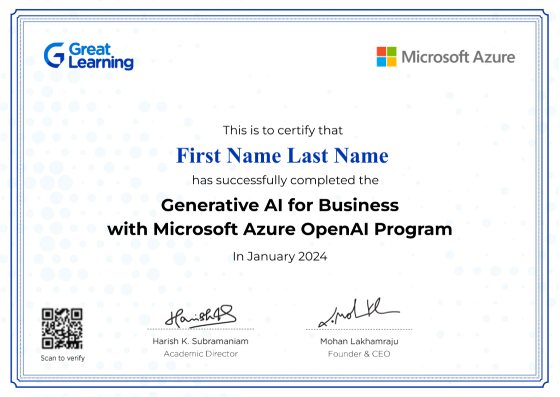
* Image for illustration only. Certificate subject to change.
Meet your faculty
Meet our expert faculty with in-depth Data Science & AI knowledge and a passion to help you succeed
-

Dr. Abhinanda Sarkar
Senior Faculty & Director Academics, Great Learning
30+ years of experience in data science, ML, and analytics.
Ph.D. from Stanford, taught at MIT, ISI, and IIM Bangalore.
Know More
-

Connor Hagen
Director of Technology at Microsoft's AI Co-Innovation Labs
9+ years of experience in AI, building Generative AI solutions
Master’s Degree in CS from Western Washington University
Know More
-

Dr. Pavankumar Gurazada
Senior Faculty, Academics, Great Learning
15+ years of experience in marketing, digital marketing, and machine learning.
Ph.D. from IIM Lucknow; MBA from IIM Bangalore; IIT Bombay graduate.
Know More




 LinkedIn Profile
 University Link
Interact with our mentors
Interact with dedicated & experienced Data Science experts who will guide you in your learning and career journey
-

Georg Huettenegger
 Generative and Conversational AI Leader, Deloitte Consulting


Learners review our program & mentors
Read our learners experience of the program support, faculty & mentors
-
Just completed ‘Generative AI for Business with Microsoft Azure’ program. I found the course content, delivery and duration very effective in reaching my objective from the program. The sessions were conducted by MS certified trainers, ensuring good quali
Just completed ‘Generative AI for Business with Microsoft Azure’ program. I found the course content, delivery and duration very effective in reaching my objective from the program. The sessions were conducted by MS certified trainers, ensuring good quality. The program managers support is commendably supportive as we juggled work, family and learning. This is my fourth course with GreatLearning, having completed DSBA, AIFL, Cloud Computing. I will possibly come back for more..
Read More

Nandini Nagaraj
,

Get industry ready with dedicated career support
-

Career prep session
Apply the program skills for professional advancement
-

E-portfolio
Create a professional portfolio demonstrating skills and expertise


Course fees
EMI starting at ₹ 5,555/month only
The course fee is ₹ 1,20,000 + GST
Invest in your career
-

Gain practical expertise in Generative AI to drive business innovation.
-
Prepare for AI900 Certification (Optional)
-
Build impactful AI-driven solutions to fuel organizational growth.
-
Lead and collaborate on cross-functional AI projects with confidence.


Easy payment plans
Avail our EMI options & get financial assistance
-
Zero interest EMI
Upto 24 months EMI plans
Explore our monthly and zero cost EMI plans
View Plans
Third Party Credit Facilitators
Check out different payment options with third party credit facility providers



*Subject to third party credit facility provider approval based on applicable regions & eligibility

Admission Process
Admissions close once the required number of participants enroll. Apply early to secure your spot
-

1. Fill application form
Apply by filling a simple online application form.
-

2. Interview Process
Go through a screening call with the Admission Director’s office.
-

3. Join program
Selected candidates will receive an offer letter. Secure your seat by paying the admission fee.


Course Eligibility
- Applicants should have a Bachelor's degree with a minimum of 50% aggregate marks or equivalent
Batch start date
-
Online · To be announced
Admissions Open
Frequently asked questions
What is the Generative AI for Business with Microsoft Azure OpenAI program?
You will learn to build GenAI solutions using both code and no-code approaches on the Microsoft Azure platform, working with tools such as Azure OpenAI Studio, Azure AI Studio, and Python SDKs. Learners can choose between a Coding Track (Python and Azure APIs) and a No-Code Track (Azure PromptFlow and visual workflows). Both tracks are designed to deliver the same learning outcomes. The learning experience includes structured modules, hands-on case studies, and projects that help you apply Generative AI across business functions.
The program also offers an optional elective track to prepare for the Microsoft AI-900: Azure AI Fundamentals certification.
What are the highlights of this Generative AI course?
- Learn GenAI with Microsoft Azure: Build practical skills using Azure OpenAI Studio, Azure AI Studio, and Azure Prompt Flow through both code and no-code tracks.
- Code and No-Code learning tracks: Choose to learn prompt engineering and GenAI solution design with or without programming, starting from Week 3 of the program.
- Business-focused curriculum: Learn essential concepts such as prompt engineering, text classification, summarization, Retrieval-Augmented Generation (RAG), agentic systems, LLMOps, and responsible AI.
- Hands-on learning experience: Work on 10 real-world case studies and 3 hands-on projects that reflect practical business challenges across industries.
- Optional AI-900 preparation: Enroll in a certification-focused learning track to prepare for the Microsoft Azure AI Fundamentals (AI-900) certification, with sessions led by Microsoft-certified trainers.
- Certificate of Completion: Earn a co-branded certificate from Great Learning and Microsoft Azure upon successful completion of the program.
What tools will I learn to use in this AI for business program?
- Azure AI Foundry
- Models: Gpt-4 Series/ Gpt - 5 Series/ text-embedding-3 Series
- Azure PromptFlow
- Azure AI Search
- Azure AI Content Understanding
- Azure App Services
- Azure Agent Factory
- Azure AI Vision
These tools will help you design, deploy, and operationalize end-to-end Generative and Agentic AI solutions for business needs.
What is the duration of the program?
Will I receive a certificate after completing the program?
What are the learning outcomes of this program?
Design and Deploy Generative AI Solutions
Build real-world GenAI workflows using Microsoft Azure OpenAI tools across both code and no-code environments, tailored to business needs.
Master Prompt Engineering for Business Applications
Use effective prompt design techniques, from zero-shot to chain-of-thought prompting, to solve tasks like summarization, sentiment analysis, classification, and content generation.
Apply GenAI Across Text, Speech, and Visual Data
Work with multimodal AI tools to build solutions that understand and generate text, audio, and images.
Implement RAG and Enterprise-Grade Workflows
Use Azure PromptFlow and Azure AI Search to build Retrieval-Augmented Generation (RAG) systems that integrate proprietary business data with LLMs.
Design Agentic AI Systems
Build and deploy autonomous AI agents using agentic design patterns, Azure AI Agent Service, and LangChain-based workflows.
Operationalize AI with LLMOps
Manage the full lifecycle of LLMs, including deployment, monitoring, CI/CD pipelines, governance, and security on Azure.
Follow Responsible and Ethical AI Practices
Understand risk mitigation, bias handling, prompt injection prevention, and privacy protection to deploy GenAI responsibly in enterprise contexts.
Prepare for Microsoft AI-900 Certification
Optionally complete a dedicated certification-focused module to strengthen your foundations in Azure AI and prepare for the AI-900 exam.
Showcase Your Skills with Real-world Projects
Work on 10 case studies and 3 hands-on projects demonstrating your ability to apply Generative AI, Agentic AI, and LLMOps to real business challenges. Build a robust e-portfolio to showcase your skills.
Do I need prior programming experience to learn Generative AI?
Is the AI-900 certification part of this Azure OpenAI program?
What skills will I acquire in this Azure OpenAI course?
By completing this Microsoft Azure OpenAI course, you will develop skills in:
- Prompt engineering for business applications
- Text classification, summarization, and content generation using LLMs
- Building and deploying Generative AI workflows
- Retrieval-Augmented Generation (RAG)
- Designing and working with AI agents
- Responsible AI principles and risk mitigation
- Using Azure OpenAI services and Python SDKs
- Working with Azure AI tools across code and no-code environments
Who is this program for?
This Microsoft Generative AI certificate program is ideal for:
- Mid and senior-level professionals in IT roles looking to lead Generative AI adoption, architecture, and enterprise integration
- Technology decision-makers responsible for major outcomes such as building internal CoEs, client-facing GenAI solutions, or scalable AI infrastructure
- Leaders from BFSI, manufacturing, pharma, consulting, and other industries seeking to drive innovation and ROI through GenAI
- Business heads and functional leaders aiming to guide GenAI adoption in their teams without necessarily writing code
- Professionals preparing for future leadership roles, such as CTO, CDO, or Innovation Heads, where GenAI will be a key strategic lever
What is the structure of the curriculum?
Pre-work: Introduces Azure AI fundamentals and applied GenAI concepts.
Course 01: Leveraging Generative AI for Business Applications
Covers Generative AI fundamentals, prompt engineering, and business use cases.
Course 02: Building Intelligent Systems with RAG & Agents
Focuses on embeddings, vector databases, Retrieval-Augmented Generation, deployment, and agentic AI systems.
Course 03: Operational Excellence with LLMOps
Covers monitoring, CI/CD pipelines, governance, and scaling GenAI applications in enterprise environments.
Course 04 (Masterclass):
Explores emerging architectures, advanced GenAI concepts, and cutting-edge industry practices.
Throughout the program, learners work on 10 case studies and 3 hands-on projects, with the flexibility to choose between coding and no-code tracks.
Are there hands-on projects in the Generative AI course?
These projects cover:
- Feature-level customer review intelligence
- Autonomous AI-powered customer support agents
- LLMOps for scalable marketing and content systems
The projects help you build a practical portfolio that demonstrates your ability to design, deploy, and operationalize Generative AI solutions for business use cases.
What are the admission requirements?
Admissions close once the required number of participants enroll. Apply early to secure your spot.
1. Fill application form
Apply by filling a simple online application form.
2. Interview Process
Go through a screening call with the Admission Director’s office.
3. Join program
Selected candidates will receive an offer letter. Secure your seat by paying the admission fee.
What is the Microsoft Azure OpenAI program fee?
The fee for the Generative AI for Business with Microsoft Azure OpenAI program is ₹1,20,000 + GST. Flexible payment options are available, including EMI plans.
Are there any scholarships or financial assistance available?
No formal scholarships are listed as part of the program. However, flexible payment options are available, including EMI plans that let you spread the fee over time. In some cases, you may also explore third-party financing or loan options to support your fee payments, subject to eligibility and approval by the provider.
Does the Microsoft Generative AI course offer placement assistance?
Is the program suitable for someone without a coding background?
How will this program help in implementing AI in my team or organization?
The program will provide you with the tools, frameworks, and best practices to lead AI adoption in your organization. You will learn how to design, build, and deploy Generative AI solutions using Azure tools, and gain insights on how to integrate these solutions into existing business workflows.
What career opportunities will this program open up?
This program helps professionals build practical Generative AI capabilities that can be applied across a wide range of roles and industries. The skills learned are relevant for professionals involved in AI strategy, solution design, business intelligence, product development, and enterprise AI adoption.
How can I showcase my skills after completing the Microsoft Generative AI course?
After completing the Microsoft Generative AI course, you can showcase your skills by:
- Building Real-World Solutions: Work on 10+ case studies and 3 hands-on projects to demonstrate your ability to apply Generative AI in business contexts.
- Creating a Portfolio: Compile your projects and case studies into a professional e-portfolio to showcase your practical experience.
- Earning a Certificate: Share your co-branded certificate from Great Learning and Microsoft Azure to validate your expertise in Generative AI.
- Demonstrating Key Skills: Highlight your ability to design and deploy GenAI solutions, use prompt engineering, and apply AI to text, speech, and image data.
What is the difference between Generative AI and Agentic AI?
Generative AI focuses on creating content across multiple modalities (text, image, speech) using models like GPT and DALL·E. Agentic AI, on the other hand, refers to AI systems that can perform tasks autonomously and make decisions based on reasoning and action plans.
Can I take the program if I have no prior experience in AI?
Yes, the program is suitable for professionals who are new to Generative AI. The Microsoft Generative AI course is designed with dual learning tracks (coding and no-code), allowing you to learn either with or without coding experience. However, having some basic understanding of AI concepts would be beneficial. The pre-work modules will help you get up to speed.
Yes, you can take the program even if you have no prior experience in AI.
How will I learn to apply Generative AI in business?
The program includes real-world business case studies and hands-on projects. You will learn how to apply Generative AI to solve challenges in areas such as marketing, customer service, and product design.
Can I attend the program while working full-time?
Yes, the program is designed to be flexible and suitable for working professionals. It includes live sessions, recorded lectures, and hands-on assignments that you can complete at your own pace.
What are some practical business use cases for Generative AI?
Generative AI can be applied across various industries for:
- Marketing: Personalizing advertisements, creating content, and enhancing customer engagement.
- Customer Service: Automating responses in chatbots or virtual assistants, providing 24/7 support.
- Product Design: Generating innovative ideas, product mockups, or prototypes based on data and trends.
- Healthcare: Analyzing patient data for insights, generating summaries of medical records, and predicting health trends.
What is LLMOps, and how does it fit into the deployment of Generative AI?
LLMOps (Large Language Model Operations) refers to the practices involved in managing the lifecycle of large language models, including deployment, monitoring, versioning, and governance. The program introduces LLMOps concepts to help learners understand how Generative AI solutions are maintained, monitored, and scaled effectively in enterprise environments.
 Application Closes
Today
Application Closes
Today

Related Data Science Programs
-


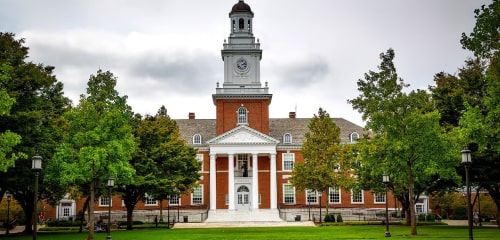
Johns Hopkins University
Certificate Program in Applied Generative AI
16 weeks · Online
Delivered by JHU Faculty -


McCombs School of Business at The University of Texas at Austin
Post Graduate Program in Generative AI for Business Applications
14 Weeks · Online
-
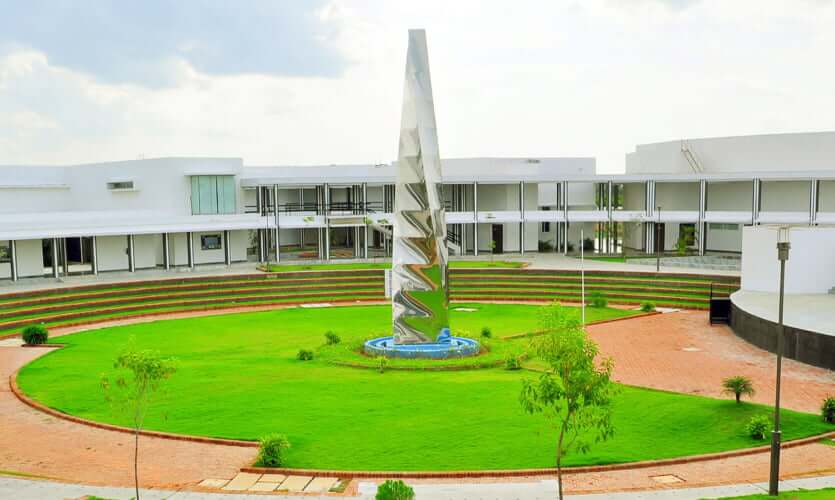

Great Lakes Executive Learning
PGP in Data Science (with Specialization in Gen AI)
5 months · Classroom
Dedicated Placement Assistance



Batch Profile
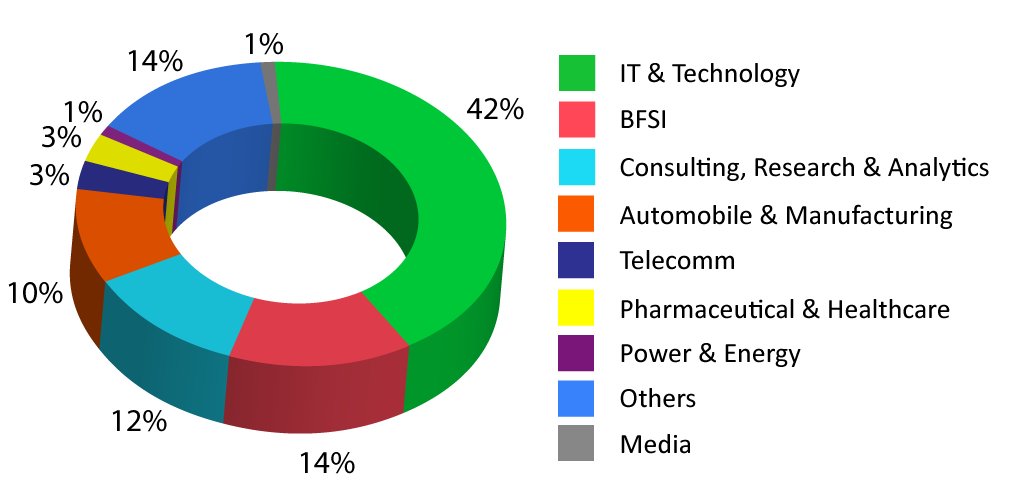
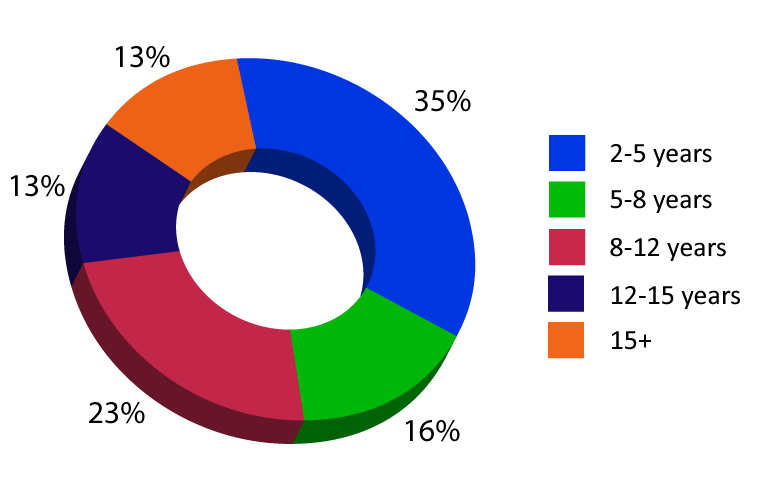
The PGP-Data Science class consists of working professionals from excellent organizations and backgrounds maintaining an impressive diversity across work experience, roles and industries.
Batch Industry Diversity
Batch Work Experience Distribution
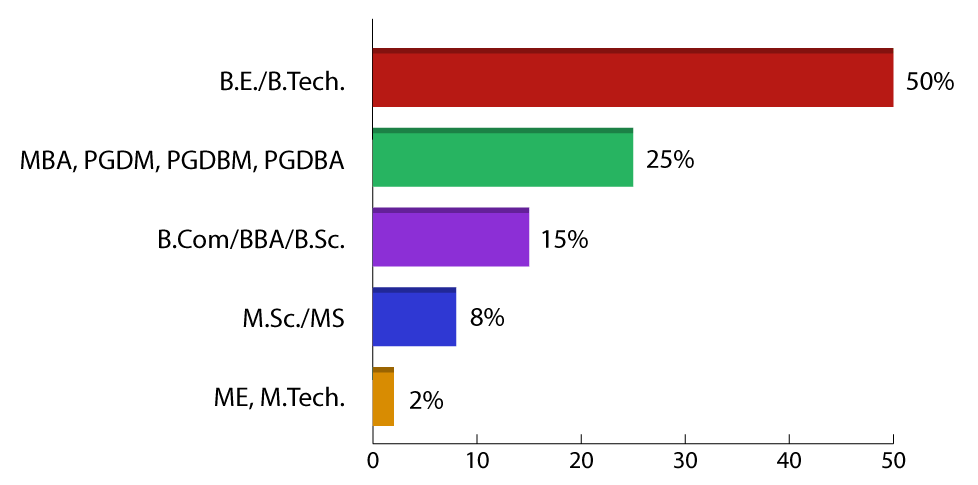
Batch Education Diversity
The PGP-Data Science learners come from some of the leading organizations.

Hey there! Welcome back.

Forgot your password? No problem.

You are already registered. Please login instead.
Login
Forgot Password?
Enter your registered email and we'll send you a link to change your password.